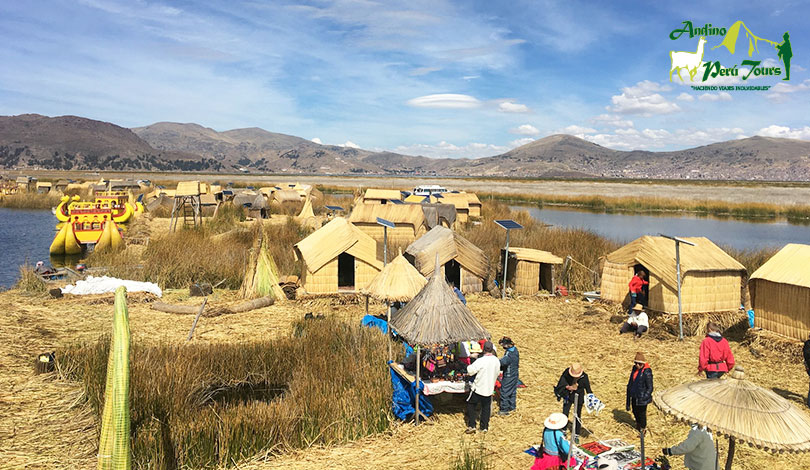
Discover the Floating Islands of the Uros

In the middle of Lake Titicaca lies one of Puno’s most unique sites: the Floating Islands of the Uros, known for being built primarily from totora reeds using traditional techniques passed down through generations.
During your visit, you’ll also learn how the islands are built and maintained, see homes and boats made of totora reeds, and get a firsthand look at activities such as fishing, handicrafts, and community-based tourism.
Where are the Uros Islands located?
The Uros Islands are located in Puno Bay, on Lake Titicaca, at an elevation of approximately 3,810 meters above sea level. This area is known for its reed beds, birds, and aquatic landscapes.
To get there, you must take a boat from the port of Puno; the trip usually takes between 20 and 40 minutes, depending on the type of boat and the island you are visiting.

Why do the Uros Islands float?
The Uros Islands float mainly thanks to the totora, an aquatic plant that grows in the shallow areas of Lake Titicaca.
Construction begins with blocks of totora roots called khili, which are capable of floating. Several layers of dried totora are then laid on top of this base to form a firm surface where homes can be built and daily activities can take place. In addition, the islands have anchoring systems that help keep them in place.
What will you do during a visit to the Uros?
The experience may vary depending on the island and the type of tour, but it usually begins with an explanation of how the floating islands are built and maintained.
Some of the experiences you may encounter include:
- An explanation of how the islands are built.
- Learning about the traditional uses of totora reeds.
- Rides on totora rafts.
- Shopping for handicrafts.


How much time do you need to visit the Uros Islands?
Because of their proximity to Puno, it’s possible to take a half-day excursion, including the boat ride and the visit to the island.
If you’re looking for a more complete experience, some communities offer experiential tourism activities, meals, and even lodging by the lake.
What is the best time of year to visit Uros?
To choose the best travel dates, it’s helpful to compare the conditions of each season with the type of experience you’re looking for.
| Season / Months | Weather & Conditions | Recommendation |
|---|---|---|
| April to October | Fewer rains and better conditions for boat rides and outdoor activities | Most recommended season |
| June, July, and August | Clearer days and little rain, but very cold mornings and nights | Ideal if you prioritize good weather |
| November to March | More frequent rains and greener landscapes | Can be visited, but it is advisable to bring rain gear |
| May, June, September, and October | Good weather and, in some cases, fewer crowds | Good option to balance weather and tranquility |
What should you bring when visiting the Uros Islands?
Lake Titicaca is located at a high altitude, and the weather can change throughout the day, so it’s best to dress in layers.
For the visit, you should bring:
- A jacket or windbreaker.
- Sunscreen.
- Hat or cap.
- Sunglasses.
- Water.
- Comfortable shoes.
- Raincoat if you’re traveling during the rainy season.
Uros, Taquile, or Amantaní?
You don’t have to choose just one island, as each offers a different experience on Lake Titicaca.
Uros is the closest option to Puno and is known for its floating islands and the traditional use of totora reeds. Taquile requires a longer boat ride and is known for its textile traditions and scenery. Amantaní, on the other hand, is a good option for those who have more time and are looking for a more peaceful community experience.
Frequently Asked Questions
They are located in Puno on Lake Titicaca, at an altitude of approximately 3,810 meters (12,500 feet) above sea level. You can reach them by taking a 20 to 40-minute boat ride from the port of Puno.
The islands float due to a foundation of interlocking totora reed roots called khili. The locals stack multiple layers of dry totora reeds on top of this buoyant base to create a solid surface for homes, anchoring them to the lakebed.
A standard excursion takes just half a day due to their proximity to Puno. For a more complete cultural immersion, overnight homestays with local families are also available.
The best time to visit is during the dry season from April to October. The months of June, July, and August offer clear, sunny days perfect for boat rides, though morning and evening temperatures can be very cold.